Сайт использует cookie и счётчики посещений для работы и статистики. Политика конфиденциальности
Найдено: 60+
Overview ISO 1833-17:2019 is an international standard developed by ISO that specifies a quantitative chemical analysis method for textiles. This method focuses on determining the mass percentage of…
Overview ISO 1833-19:2006 - Textiles - Quantitative chemical analysis - Part 19: Mixtures of cellulose fibres and asbestos (method by heating) defines a laboratory procedure to determine the percenta…
1 Scope This part of ISO 1833 specifies a method, using sulfuric acid, to determine the percentage of chlorofibres, after removal of non-fibrous material, in textiles made of binary mixtures of — chl…
1 Scope This part of ISO 1833 specifies a common method for the quantitative chemical analysis of various binary mixtures of fibres. This method and the methods described in the other parts of ISO 18…
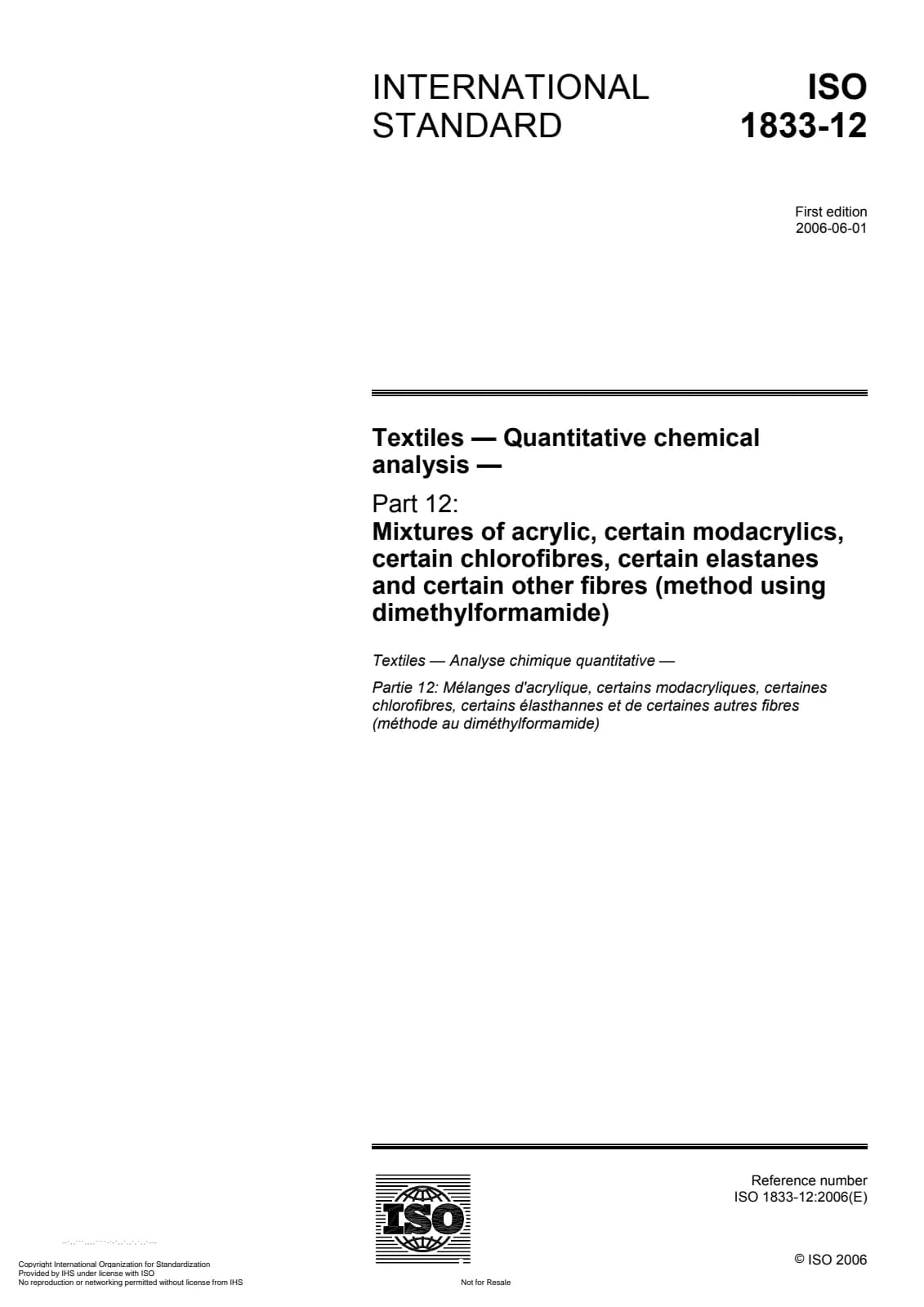
1 Scope This part of ISO 1833 specifies a method, using dimethylformamide, to determine the percentage of acrylic, modacrylic, chlorofibre or elastane, after removal of non-fibrous matter, in textile…
Overview ISO 1833-14:2019 is an international standard established by the International Organization for Standardization (ISO) that specifies a quantitative chemical analysis method for textiles, par…
Overview ISO 1833-13:2019 defines a quantitative chemical analysis method for determining the mass percentage of chlorofibre in textile mixtures using an azeotropic mixture of carbon disulfide (CS2)…
Overview ISO 1833-18:2020 is an internationally recognized standard developed by the International Organization for Standardization (ISO) that details a quantitative chemical analysis method for text…
Overview ISO 1833-10:2019 specifies a quantitative chemical analysis method for determining the mass percentage of triacetate or polylactide (PLA) in textile mixtures using dichloromethane (DCM) as t…
Overview ISO 1833-15:2019 specifies a quantitative chemical analysis method for determining the composition of textiles that are mixtures of jute and certain animal fibres (wool and/or hair). The met…
Overview ISO 1833-1:2020 - Textiles - Quantitative chemical analysis - Part 1: General principles of testing - defines the common principles used to determine the fibre composition of textile mixture…
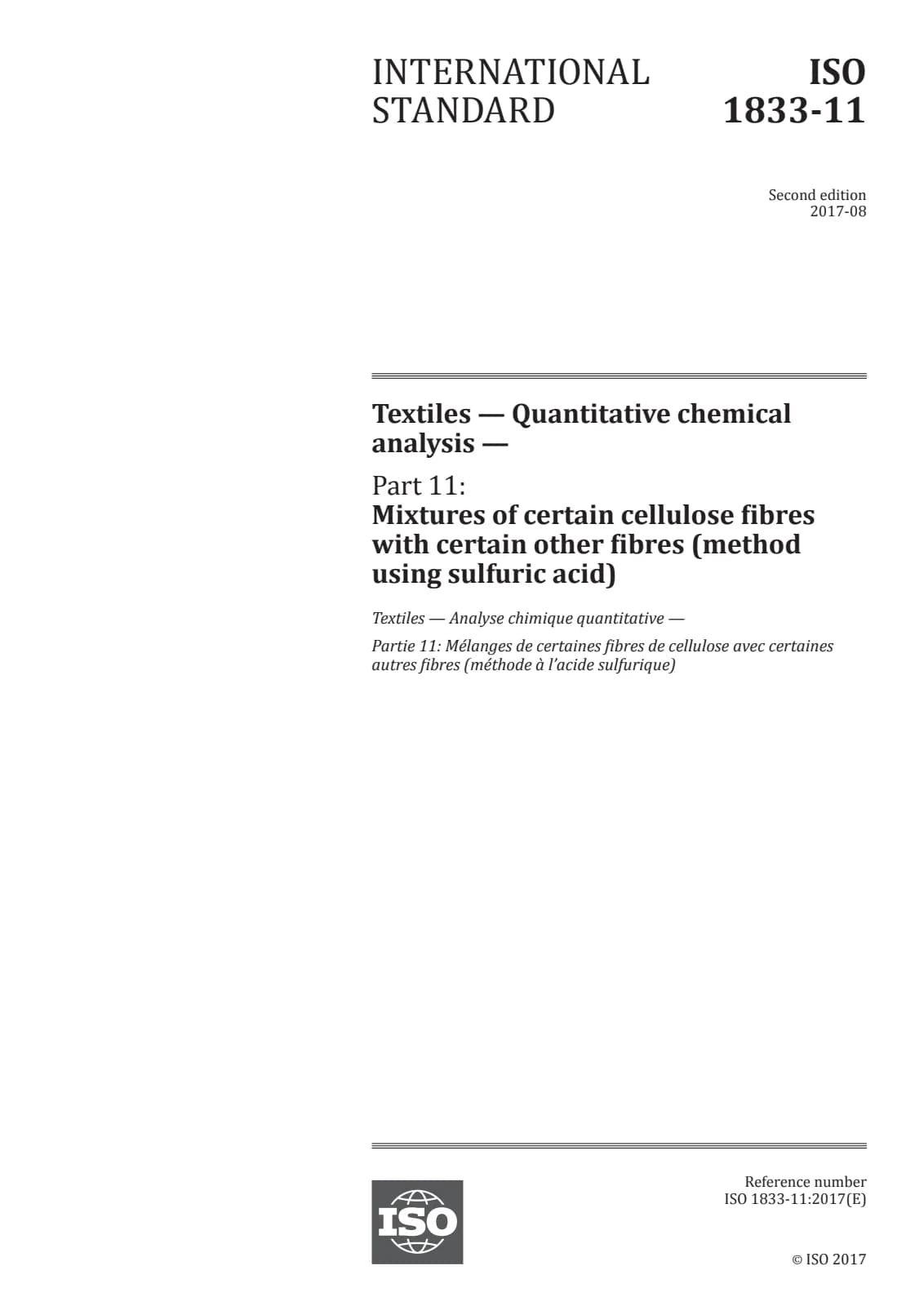
Overview ISO 1833-11:2017 - Textiles: Quantitative chemical analysis - Part 11 - specifies a standardized sulfuric acid method to determine the mass percentage of cellulose fibres (after removal of n…
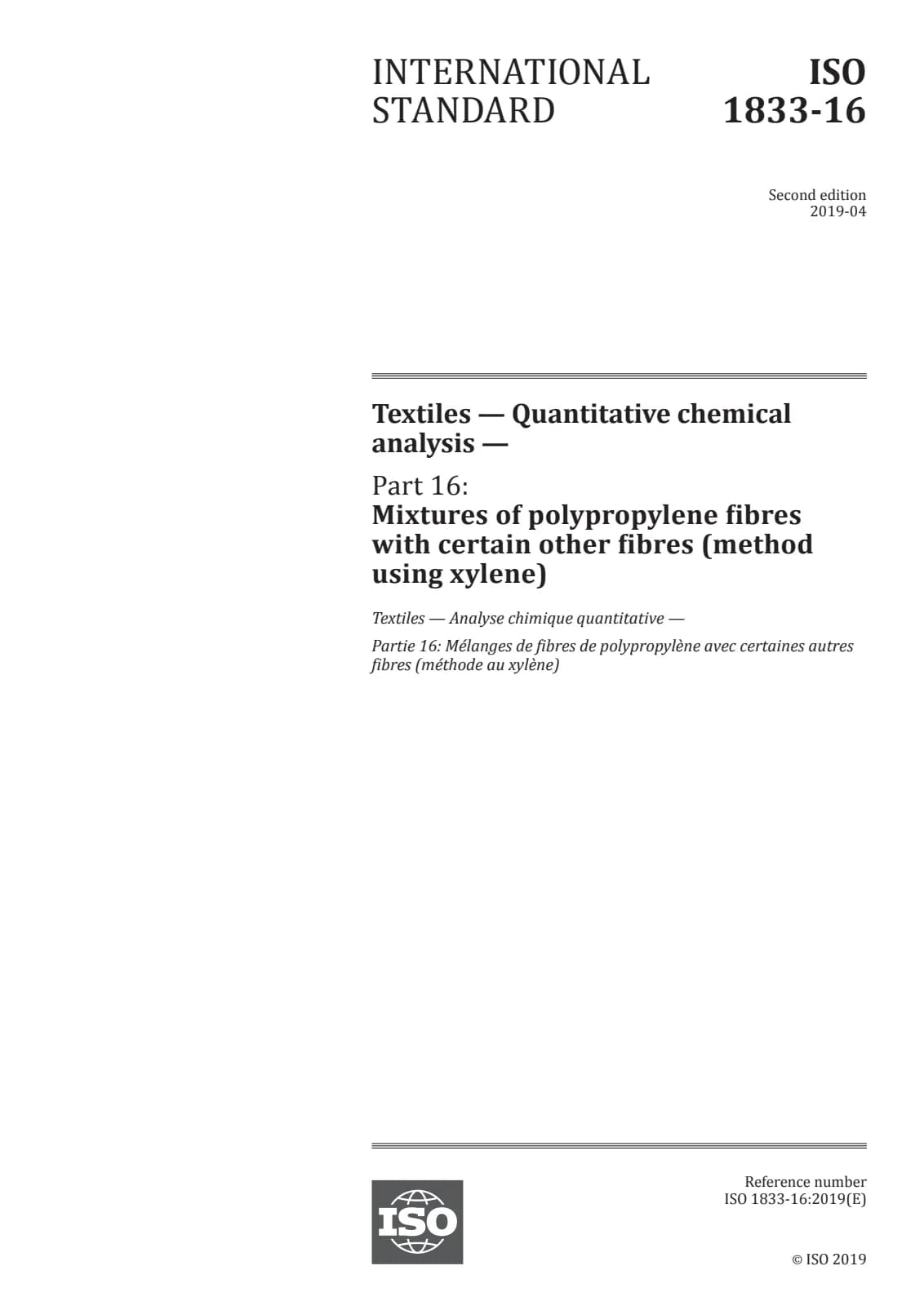
Overview ISO 1833-16:2019 - Textiles - Quantitative chemical analysis - Part 16 defines a laboratory method for determining the mass percentage of polypropylene in textile blends using xylene as the…
Overview SIST EN ISO 1833-18:2020 is an internationally recognized standard developed by CEN (European Committee for Standardization) and ISO. Its focus is the quantitative chemical analysis of texti…
Overview EN ISO 1833-12:2020 (ISO 1833-12:2020) defines a quantitative chemical analysis method for determining the mass percentage of acrylic, certain modacrylics, certain chlorofibres and certain e…
Overview EN ISO 1833-18:2020 is an internationally recognized standard developed by CEN (European Committee for Standardization) and ISO. Its focus is the quantitative chemical analysis of textiles,…
Overview EN ISO 1833-1:2020 - Textiles - Quantitative chemical analysis - Part 1: General principles of testing - establishes the common principles for determining the quantitative composition of fib…
Overview SIST EN ISO 1833-17:2020 is an essential standard for the quantitative chemical analysis of textiles, focusing specifically on mixtures of cellulose fibres and certain other fibres combined…
Overview EN ISO 1833-17:2020 is an essential standard for the quantitative chemical analysis of textiles, focusing specifically on mixtures of cellulose fibres and certain other fibres combined with…
Overview EN ISO 1833-15:2019 - Textiles: Quantitative chemical analysis, Part 15 - specifies a chemical method for determining the composition of textiles made from mixtures of jute and certain anima…
Overview SIST EN ISO 1833-13:2019 is an international standard specifying a quantitative chemical analysis method for textiles. It focuses on determining the mass percentage of chlorofibres in textil…
Overview SIST EN ISO 1833-14:2019 establishes a standardized method for the quantitative chemical analysis of textiles composed of mixtures of acetate fibers with certain chlorofibres or after-chlori…
Overview EN ISO 1833-13:2019 is an international standard specifying a quantitative chemical analysis method for textiles. It focuses on determining the mass percentage of chlorofibres in textile mix…
Overview EN ISO 1833-14:2019 specifies a quantitative chemical analysis method for determining the mass percentage of acetate in textile mixtures containing acetate and certain chlorofibres (includin…
Overview SIST EN ISO 1833-16:2019 is an international standard developed by CEN and ISO for the quantitative chemical analysis of textiles. Specifically, it defines a precise method using xylene to d…
Overview EN ISO 1833-16:2019 is an international standard developed by CEN and ISO for the quantitative chemical analysis of textiles. Specifically, it defines a precise method using xylene to determ…
Overview SIST EN ISO 1833-10:2019 defines a standardized method for the quantitative chemical analysis of textiles containing mixtures of triacetate or polylactide fibers with various other types of…
Overview EN ISO 1833-10:2019 specifies a quantitative chemical analysis method for determining the mass percentage of triacetate or polylactide in textile mixtures using dichloromethane. The standard…
Overview EN ISO 1833-11:2017 - part of the ISO 1833 series on textiles - specifies a quantitative chemical analysis method using sulfuric acid to determine the mass percentage of cellulose fibres (af…
Overview EN ISO 1833-19:2010 (ISO 1833-19:2006) specifies a quantitative chemical analysis method for textiles composed of binary mixtures of cellulose fibres (cotton or regenerated cellulose) and as…
1 Scope This part of ISO 1833 specifies a method, using xylene, to determine the percentage of polypropylene, after removal of non-fibrous matter, in textiles made of binary mixtures of — polypropyle…
1 Scope This part of ISO 1833 specifies a method, using acetic acid, to determine the percentage of acetate, after removal of non-fibrous matter, in textiles made of mixtures of — acetate and — certa…